AI in Education · Builder of AI Literacy Tools
I build the tools, curricula, and frameworks that make AI literacy real.
Ed.D. candidate · American University // DLC Manager · Montgomery College
The work
Nine builds across AI literacy, workshops, and doctoral research — shown as they actually look, each in its own colors. The gated ones are real too; they're just for the people they were built for.
01 · AI Literacy Tools
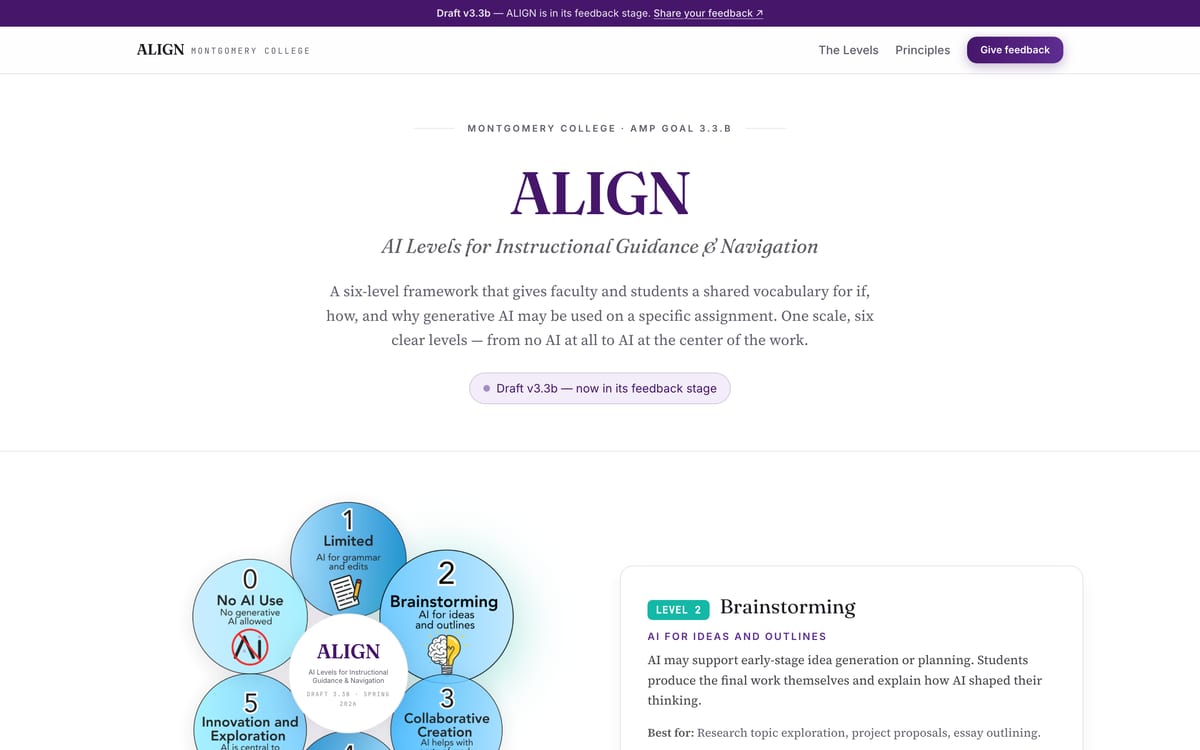
AI Levels for Instructional Guidance & Navigation
Gives faculty and students shared language for when and how AI belongs in coursework — six levels, one vocabulary.
Scoring app: invite-gated for faculty
Designing AI-resilient assignments
Scores every sentence of an assignment by how AI-familiar versus human-specific it is, then suggests redesigns that protect original student thinking.
Live · invite-gated
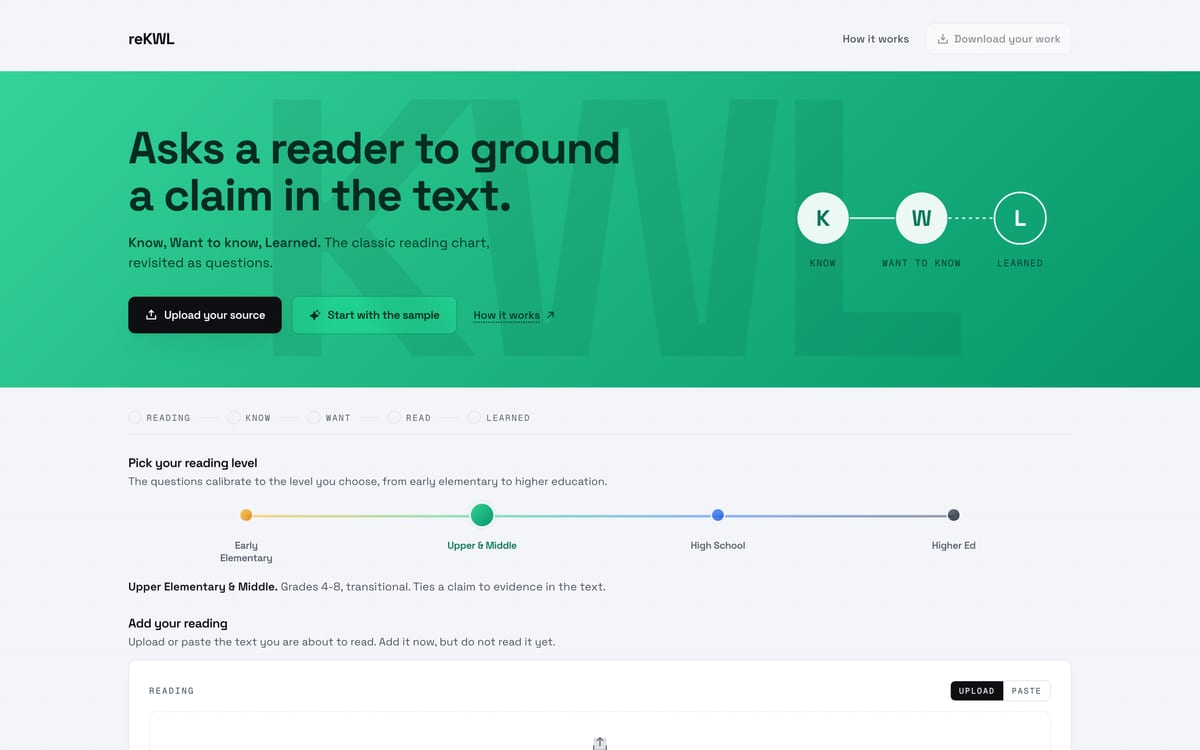
A KWL chart that asks, never answers
A Socratic reading chart that never fills itself in. Students write what they know and wonder; reKWL responds with questions tuned to their grade band.
Live
A stackable, open-access credential
An AI literacy credential with an open-access curriculum, designed and run end to end at Montgomery College’s Digital Learning Center.
Program · Montgomery College
02 · Workshop Companions
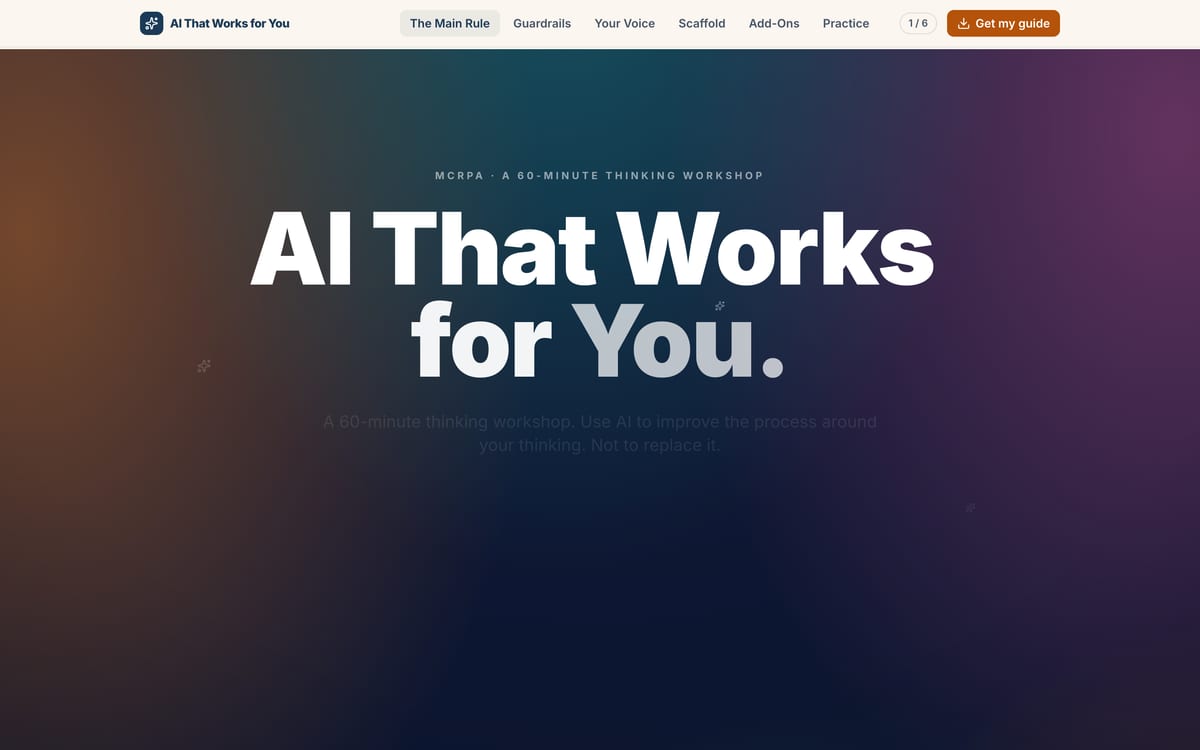
A 60-minute thinking workshop, kept alive
Built for an MCRPA session on practical AI — the workshop’s rule, guardrails, and practice stay where participants can return to them.
Live
The same idea, for business owners
A hands-on 90-minute workshop companion for small-business owners: use AI to improve the process around your work, not to replace your judgment.
Live
03 · Doctoral Work
Plan · Do · Study · Act, coached
Coaches a Plan-Do-Study-Act improvement outline phase by phase, then exports a submission-ready Word document.
Live · cohort passcode
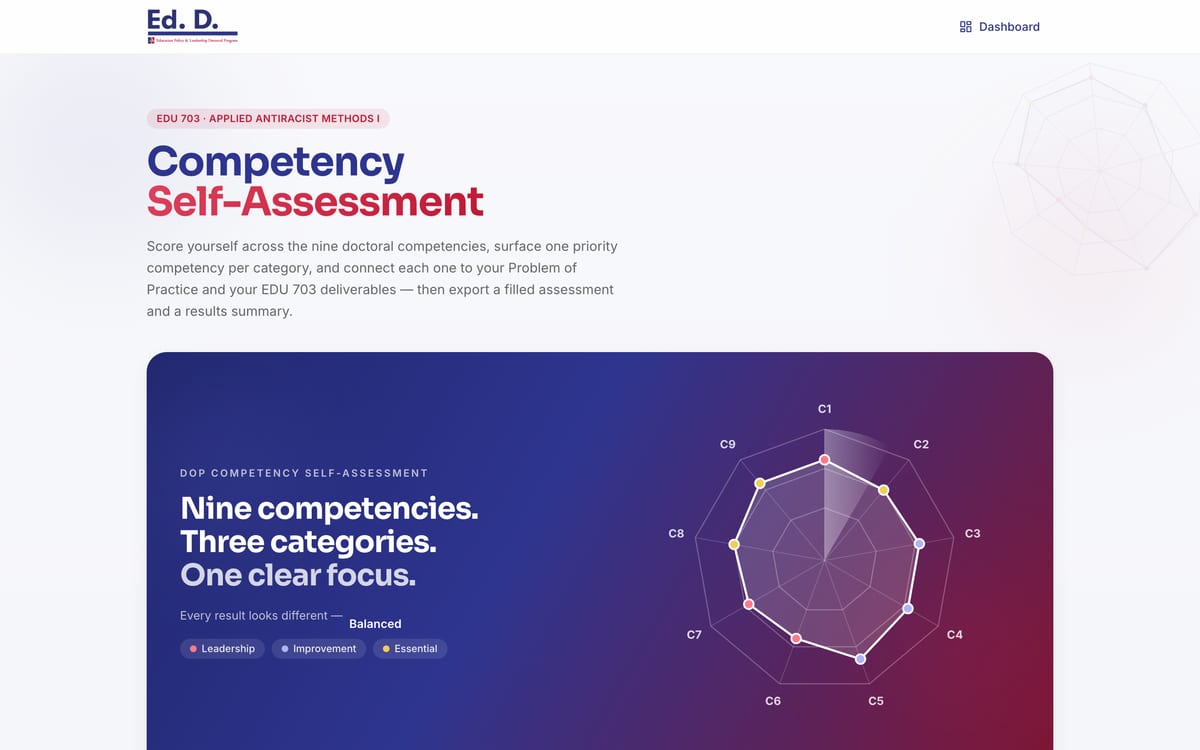
Doctoral competencies, self-scored
Replaces a paper competency self-assessment with private, immediate feedback and two generated PDFs.
Live
A research tool for a forthcoming book
Helps chapter authors of a forthcoming book find the episodes, rationale, and citations that support a claim.
Live · invite-gated
Order
0%
Entropy · effort scatters
Entropy → Negentropy
A compliance-driven assignment is high-entropy: effort scatters into busywork. Satisfy the three basic needs and the work generates its own order.
Click each need to resolve the entropy.
Working tool · White paper · PDF · Worked example · PDF
Research · White paper · Working tool
AI-Supported Assignment Design for Student Autonomy and Cultural Relevance in Higher Education
Daniel Umana · American University
A white paper that reframes the AI-in-coursework debate. Four in five university students now use generative AI, and most institutions have answered with detection and policy. This paper argues detection treats the symptom: when a student routes an assignment through AI, that is information — the task did not require enough of their own thinking, context, or judgment to feel worth doing. The real problem is motivational, not technological.
Drawing on Self-Determination Theory (Ryan & Deci, 2017) and Zaretta Hammond's work connecting culturally responsive teaching to brain-based learning (Hammond, 2015), it proposes a generative-AI workflow that redesigns existing assignments to satisfy three basic psychological needs — autonomy, competence, and relatedness. It extends both frameworks with negentropy: a well-designed assignment generates internal order and meaning that sustains genuine engagement without external enforcement, and AI is what makes that feasible at scale.
How it works — the four-step workflow
Name the skill
Every assignment teaches an underlying skill, separate from its topic. Naming it lets the assignment be personalized without losing rigor.
Gather student context
A brief, one-time intake collects each student's professional background, interests, and goals — four short questions.
Revise the assignment
Generative AI routes the assignment's fixed objectives through the student's context, changing the entry point but not the cognitive demand.
Build the rubric
A single rubric scores the underlying skill, not the topic, so every student is held to the same standard.
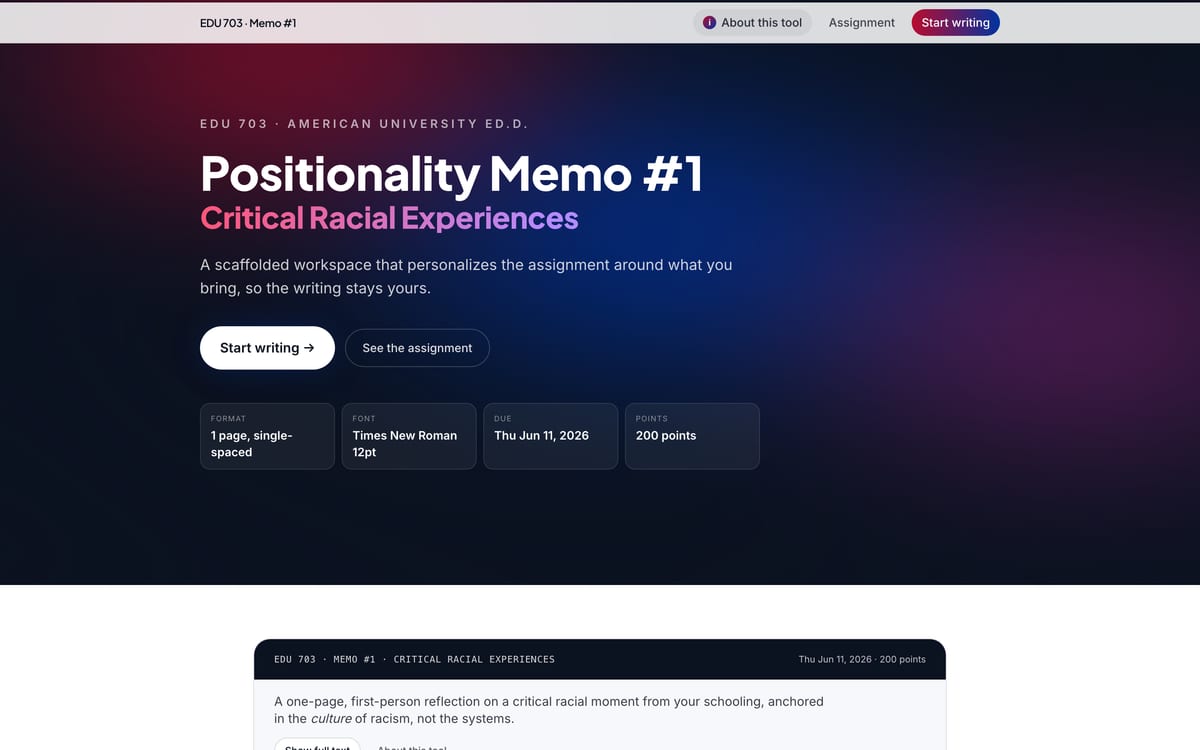
The worked example
A worked demonstration runs the full workflow on one real assignment — a doctoral Positionality Memo — start to finish, showing how the same objectives and rigor are preserved while the entry point becomes the student's own experience. The throughline: an assignment a student has a real reason to do is one they will do themselves.
Ideas & talks
Selected writing
Critical pedagogy
AI literacy
Frameworks
Equity
Digital equity
Learning
Speaking
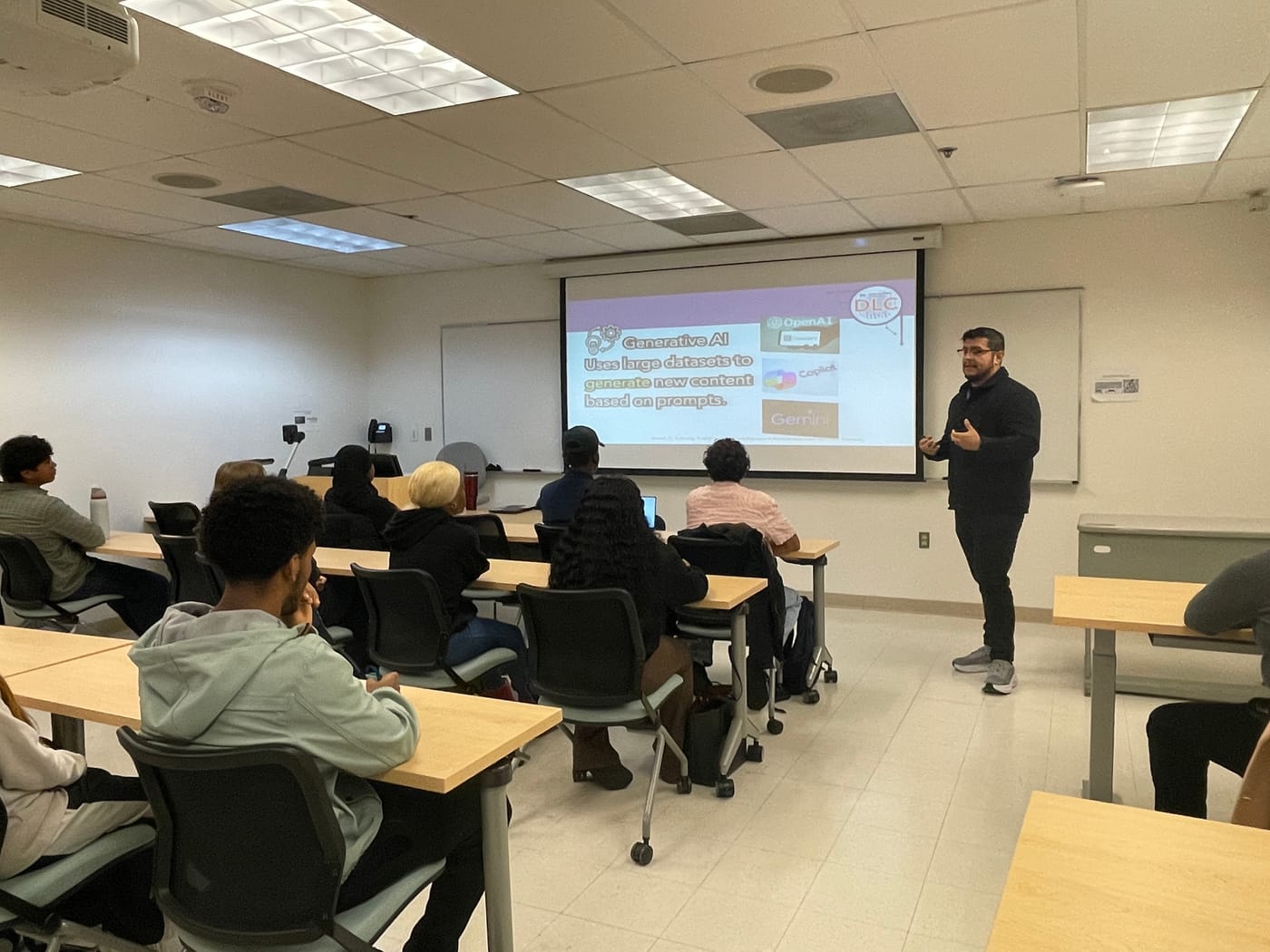
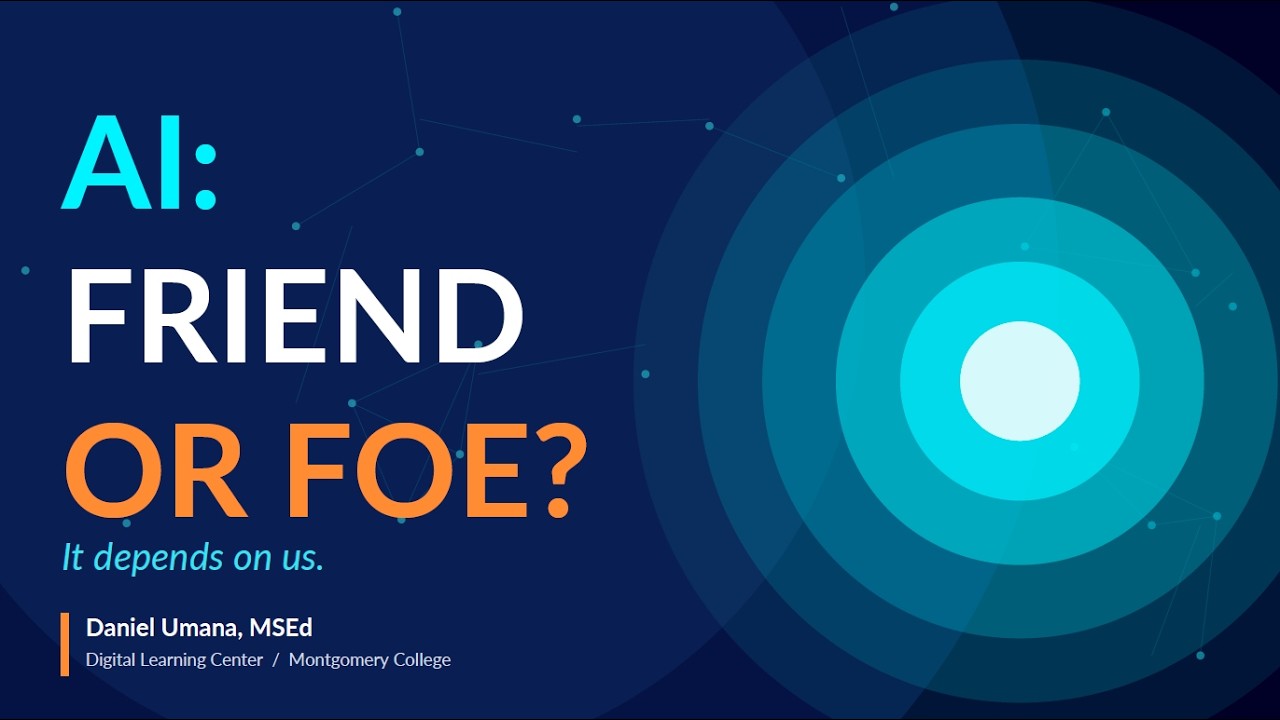
AI: Friend or Foe?
Future of Tech Lunch & Learn · Montgomery College ignITe Hub
AI: Friend or Foe? / The AI Debate: Progress or Problem?
Montgomery College ignITe Hub — Future of Tech Lunch & Learn
Speaker · May 2026
Building Student-Facing GenAI Resources
CALD Conference 2025 — Rockville, MD
Speaker · 2025
Maryland Latinos Unidos Futurist Summit 2025
Maryland Latinos Unidos
Presenter · 2025
AI literacy workshops for students, faculty, and K-12 audiences
“AI: Friend or Foe?”, “AI Study Ready”, “AI and You”, and more
Designer & Facilitator · Ongoing
Montgomery College AI Club
Mentorship
Mentor · 2024 – Present
Joyce Gray Memorial Award. Peer-selected award, Montgomery College Leadership Development Institute (32nd cohort), 2026.
Experience
Digital Learning Center (DLC) Manager
Montgomery College
Rockville, MD · Aug 2024 – Present
Graduate Research Assistant
American University, School of Education
Washington, DC · May 2026 – Present
Founding Dean of Students
Uncommon Public Schools
Brooklyn, NY · Jun 2023 – Jul 2024
School Culture Specialist
Rocketship Public Schools
Washington, DC · Jun 2022 – Jul 2023
Dean of Students
DC Scholars Public Charter School
Washington, DC · Jun 2021 – Jul 2022
Dean of Students / Grade Chair & 4th Grade Teacher
Breakthrough Public Schools
Cleveland, OH · Jun 2017 – Jul 2021
Education
Ed.D., Education Policy & Leadership
American University, School of Education · Expected May 2028
M.S.Ed.
Johns Hopkins University · 2019
B.S., Public Health Science
University of Maryland · 2016
Skills
AI certifications
About
Daniel Umana is an educator and AI-in-education leader. He came up through the classroom — nearly a decade in K-12 as a teacher, grade chair, school-culture leader, and founding dean — before bringing that experience to higher education. Today he manages Montgomery College's Digital Learning Center, where he leads the team and the operations behind a college-wide AI literacy effort: he launched a credentialed AI literacy microcredential and the open curriculum behind it, and led the cross-functional faculty-and-staff group that created the ALIGN framework. He is an Ed.D. candidate in Education Policy and Leadership at American University, where he also serves as a Graduate Research Assistant. He is a first-generation college graduate and bilingual in English and Spanish.
How I work
I lead the people and the work behind AI literacy — and I build the tools, curricula, and frameworks that make it usable for real students and faculty.
Contact
I help colleges and programs stand up AI literacy that sticks — frameworks, credentials, faculty enablement, and the tools that make them usable. For roles, speaking, or collaboration, the fastest way to reach me is email or LinkedIn.